
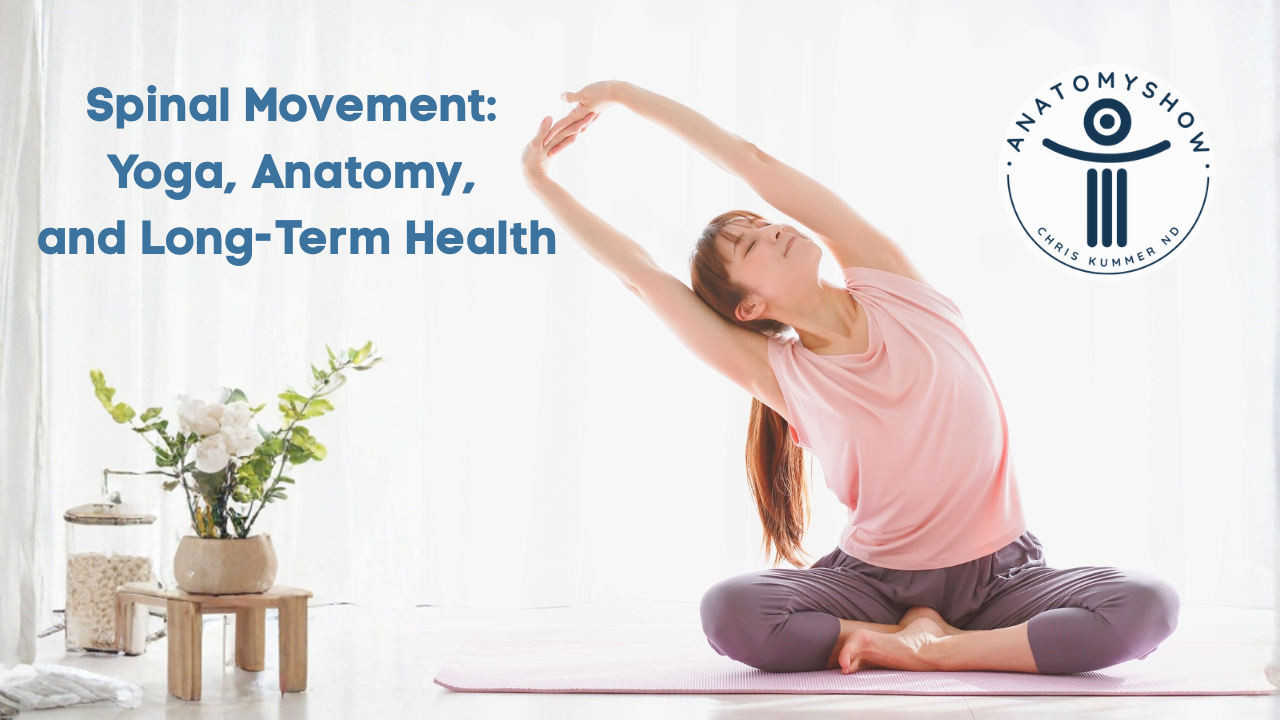
Spinal Movement: Yoga, Anatomy, and Long-Term Health
Dec 16, 2025The spine is more than a structural column that holds us upright. It is a living, responsive system that reflects how we move, how we breathe, how we manage stress, and how we live. In yoga, we often say that you are only as young as your spine, yet many modern lifestyles do very little to support spinal health.
Long hours of sitting, repetitive movement patterns, stress, and gravity all leave their imprint on the spine. Over time, these influences can reduce mobility, increase tension, and affect not only how we move, but how we feel—physically and mentally.
Yoga offers a powerful, time-tested approach to spinal mobilisation and health. When informed by yoga anatomy, it becomes even more effective. Understanding how the spine is designed to move, and why movement matters, allows us to practice yoga not as a collection of shapes, but as a conscious exploration of movement and nervous system regulation.
This article explores the relationship between spinal mobility and overall health, the effects of modern life on the spine, and how yoga—especially when informed by anatomy and therapeutic principles—can help restore movement, resilience, and ease.
The Spine: A Living, Dynamic Structure
Anatomically, the functional spine is made up of 24 vertebrae plus your sacrum and tailbone, intervertebral discs, ligaments, muscles, and fascia, forming a flexible yet supportive structure. It houses and protects the spinal cord, one of the central components of the nervous system, and serves as a key communication highway between the brain and the body.
Rather than being a rigid pillar, the spine is designed for movement. Each region—the cervical, thoracic, lumbar, sacral, and coccygeal spine—has distinct shapes and movement capacities. Together, they allow us to bend, twist, extend, stabilize, and adapt to our environment.
Spinal health is not defined by how straight or “aligned” the spine looks, but by how well it can move, respond, and recover. Mobility and stability are not opposites; they are complementary qualities that the spine requires to function optimally.
Mobility and Health: Why Movement Matters
Mobility is often misunderstood as flexibility. While flexibility refers to the length of tissues, mobility refers to the ability of joints and tissues to move actively and with control through their available range.
Healthy spinal mobility supports:
- Even distribution of mechanical load
- Hydration of intervertebral discs
- Efficient muscle coordination
- Nervous system regulation
- Ease of breathing and circulation
When movement is limited—whether due to injury, fear, habit, or inactivity—certain spinal segments become overloaded while others become underused. Over time, this imbalance can contribute to pain, stiffness, and degeneration.
From a broader health perspective, movement is essential for maintaining tissue health, circulation, hormonal balance, and mental wellbeing. The spine, sitting at the center of the body, reflects these systemic influences clearly.
Stress, Tension, and Gravity: The Invisible Forces Acting on the Spine
Gravity is always present. It compresses the spine, particularly when we remain upright or seated for long periods. Under healthy conditions, movement helps counteract this compression by nourishing the discs and tissues.
Stress, however, adds another layer. Psychological stress often manifests as muscular tension, shallow breathing, and protective postures. Over time, this can reduce spinal mobility and alter movement patterns.
Common stress-related spinal patterns include:
- Chronic neck and shoulder tension
- Reduced thoracic mobility
- Excessive lumbar compression
- Rigid or guarded movement
Yoga recognizes that the spine is influenced not only by physical forces but by emotional and neurological states. Practices that integrate breath, awareness, and slow, intentional movement can help unwind both physical tension and nervous system overload.
Systemic Effects of Spinal Dysfunction: Beyond Pain and Stiffness
When we think about spinal dysfunction, we often focus on localized symptoms such as back pain, stiffness, or reduced mobility. However, the effects of limited spinal movement or chronic tension can extend far beyond the musculoskeletal system. Because the spine is closely linked to the nervous system, breathing mechanics, and postural organization, dysfunction in the spine can influence many other bodily systems, including digestion, circulation, and overall organ function.
The Nervous System Connection
The spinal cord and spinal nerves carry signals between the brain and the rest of the body, including the internal organs. When spinal movement is restricted, or when certain regions are chronically compressed or tense, neural communication can become less efficient.
Chronic stress patterns, poor posture, or long-term immobility may increase sympathetic nervous system dominance—the “fight or flight” state. This shift can suppress processes that are not essential for immediate survival, such as digestion, immune function, and tissue repair.
Gentle spinal movement, especially when coordinated with slow breathing, can help restore balance between sympathetic and parasympathetic activity. This is one reason why spinal mobilisation practices in yoga often have calming, grounding effects that extend well beyond the back itself.
Digestion and the Spine
Digestive organs are innervated by nerves that emerge from the thoracic and lumbar spine. Reduced mobility or chronic tension in these regions may indirectly affect digestive function by altering neural input, breathing patterns, and abdominal tone.
For example:
Limited thoracic movement can restrict diaphragmatic breathing, reducing the natural massage of the abdominal organs.
Prolonged spinal flexion or collapse may compress the abdominal cavity, affecting organ mobility.
High stress and spinal rigidity often correlate with digestive symptoms such as bloating, irregularity, or discomfort.
Yoga postures that encourage gentle extension, rotation, and lateral movement of the spine can support digestion by improving circulation, enhancing breath mechanics, and stimulating parasympathetic nervous system activity.
Circulation and Fluid Movement
The spine plays a central role in postural alignment and muscular coordination, both of which influence circulation. When spinal movement is limited, surrounding muscles may remain chronically contracted, reducing blood flow and lymphatic drainage.
Movement of the spine:
- Encourages venous and lymphatic return
- Supports healthy tissue hydration
- Helps distribute mechanical load more evenly through the body
Twists, gentle backbends, and axial elongation in yoga can enhance circulation by alternating compression and release, which acts like a pump for fluids within the tissues. This process supports not only muscular health but also the health of organs and connective tissue.
Breathing, Posture, and Organ Function
Spinal shape directly affects breathing capacity. A rigid or collapsed thoracic spine limits rib movement, which can reduce lung expansion and alter breathing patterns. Shallow breathing, in turn, influences oxygen delivery, nervous system tone, and organ function.
When yoga practice restores spinal mobility—particularly in the thoracic region—it often leads to:
- Improved breathing efficiency
- Greater awareness of breath–movement coordination
- Increased energy and reduced fatigue
These changes can have a cascading effect on multiple systems, reinforcing the idea that spinal health is inseparable from whole-body health.
A Holistic Perspective
From a yoga anatomy and yoga therapy perspective, the spine is not an isolated structure. It is a central organizing axis that influences how we breathe, digest, circulate fluids, and respond to stress.
Spinal dysfunction may manifest as pain, but it may also show up as fatigue, digestive issues, or a general sense of imbalance.
By approaching spinal mobilisation as a whole-body and whole-system practice, yoga offers a way to support not only mobility and posture, but also the underlying physiological processes that sustain health.
Inactivity and the Cost of Sitting
One of the greatest challenges to spinal health today is inactivity, particularly prolonged sitting. The human body did not evolve to sit for hours at a time, yet many people spend most of their day in chairs, cars, or in front of screens.
Prolonged sitting:
- Reduces spinal movement variability
- Increases disc compression
- Shortens hip flexors and posterior chain tissues
- Weakens postural and stabilizing muscles
- Limits thoracic extension and rotation
Over time, this can lead to stiffness, discomfort, reduced circulation, and a diminished sense of bodily awareness. Importantly, even “good posture” held statically for long periods can be problematic. The spine thrives on movement, not fixed positions.
Yoga offers an antidote by reintroducing movement in multiple directions, restoring variability, and encouraging awareness of habitual patterns.
The Directions of Spinal Movement
From an anatomical perspective, the spine is designed to move in six primary directions:
- Flexion – forward bending
- Extension – backward bending
- Lateral flexion – side bending
- Rotation – twisting
- Axial elongation – lengthening against gravity
- Stabilization – controlled resistance to movement
A healthy spine experiences all of these regularly and in balanced proportions. Many modern movement habits emphasize some directions (such as flexion in sitting) while neglecting others (such as rotation and extension).
Yoga postures and sequences can be designed to mobilize the spine in all directions, supporting balanced tissue health and neuromuscular coordination.
Yoga as a Tool for Spinal Mobilization
Yoga postures are not ends in themselves; they are vehicles for movement, awareness, and integration. When practiced with an understanding of yoga anatomy, asana becomes a powerful method for spinal mobilization rather than a quest for extreme shapes.
Examples of yoga movements that mobilize the spine include:
- Flexion: Forward folds, Cat pose
- Extension: Backbends such as Cobra, Locust, or Bridge
- Lateral flexion: Side bends in standing or seated poses
- Rotation: Twists in seated, standing, or supine positions
- Axial elongation: Mountain pose, seated postures with spinal length
- Stabilization: Planks, balances, and controlled transitions
When approached mindfully, these movements nourish the discs, stimulate the nervous system, and improve proprioception—the body’s ability to sense itself in space.
Yoga Therapy and the Spine–Health Relationship
Yoga therapy takes these principles further by adapting practices to individual needs, conditions, and capacities. Rather than applying a one-size-fits-all approach, yoga therapy uses anatomical knowledge to support healing and functional movement.
In therapeutic contexts, spinal mobilisation may be:
- Gentle and repetitive rather than intense
- Coordinated with breath to support nervous system regulation
- Adapted to pain, injury, or structural variation
- Integrated with rest and relaxation
From a yoga therapy perspective, spinal health is deeply connected to overall wellbeing. Improvements in spinal mobility often correlate with reductions in pain, improved mood, better sleep, and enhanced resilience to stress.
The Spine and the Nervous System
The spine houses the spinal cord, which transmits information between the brain and the body. Movement of the spine influences neural input, sensory feedback, and autonomic nervous system balance.
- Slow, mindful spinal movement can:
- Increase sensory awareness
- Improve motor control
- Support parasympathetic (rest-and-digest) activity
- Reduce chronic muscle guarding
This is one reason why gentle spinal practices are often calming, grounding, and emotionally regulating. The spine is not just mechanical; it is deeply neurological.
The Spine as a Reflection of Health
Posture, movement quality, and spinal mobility often reflect broader health patterns. A rigid spine may indicate fear of movement, chronic stress, or unresolved injury. A collapsed posture may reflect fatigue, low tone, or emotional withdrawal.
Yoga invites us to observe these patterns without judgment. Through awareness and movement, we can gradually restore choice, adaptability, and ease.
Rather than forcing the spine into an idealized shape, yoga anatomy teaches us to respect individual variation and work with the body we have.
Why Anatomy Knowledge Matters in Yoga Practice
Understanding anatomy does not make yoga less intuitive—it makes it safer, more empowering, and more effective. When we understand how the spine is structured and how it moves, we can:
- Modify postures intelligently
- Avoid unnecessary strain
- Recognize when mobility or stability is needed
- Personalize practice to individual bodies
- Teach and practice with greater confidence
Yoga anatomy shifts the focus from external appearance to internal experience. It encourages curiosity rather than compliance, and awareness rather than imitation.
Three Key Takeaways
- Movement is essential for spinal health.
The spine thrives on regular, varied movement in all directions. Inactivity and prolonged sitting are major contributors to spinal stiffness and discomfort.
- Yoga supports both physical and neurological health. Through mindful spinal mobilisation, breath, and awareness, yoga helps unwind tension, regulate the nervous system, and restore adaptability.
- Anatomy-informed practice empowers sustainable movement.
Understanding spinal anatomy allows us to practice and teach yoga in ways that support long-term health, resilience, and individual needs.
Spinal health is not about achieving perfect posture or extreme flexibility. It is about maintaining movement, awareness, and responsiveness over time. Through yoga, and especially through the lens of yoga anatomy, we can reconnect with the spine as a living, intelligent system—one that supports not just how we move, but how we live.
Don't miss what's happening!
New posts, education, and movement ideas delivered to your inbox.
We hate SPAM. We will never sell your information, for any reason.
Blog post by:
